Designing a scalable overdose prevention platform for K-12 students from 0 - 1
Timeline
Nov '24 - May '25
(6 months)
Role
Product Designer
Team
3 Designers
7 Developers
3 Leads
Skills
Product Design
UX Research
CONTEXT
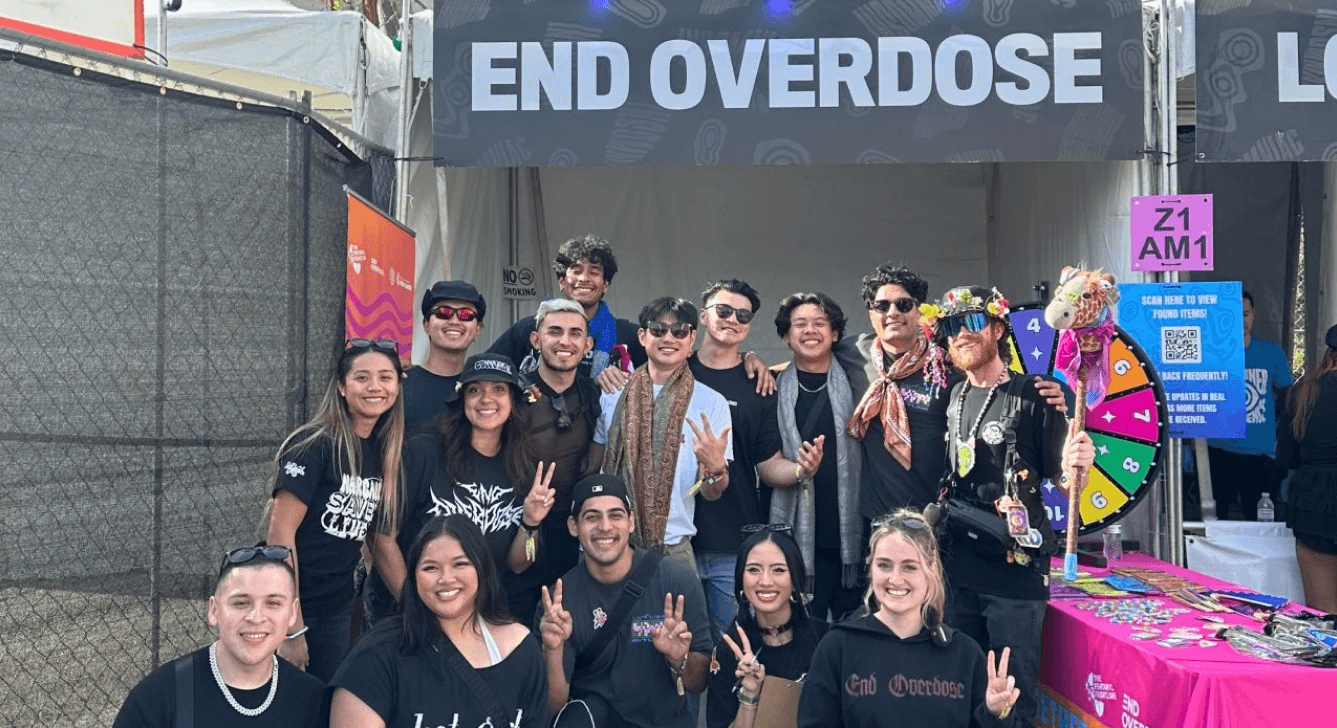
End Overdose is a non-profit organization aimed at spreading opioid overdose education.
Based in Los Angeles, End Overdose is committed to ending drug-related overdose deaths through education, medical intervention, and public awareness. They go out to communities and events, spreading resources and equipping them with things such as training, naloxone, and test strips. LA Blueprint partnered with them for the 2024-25 school year, continuing its mission to create tech for social good.
PROBLEM
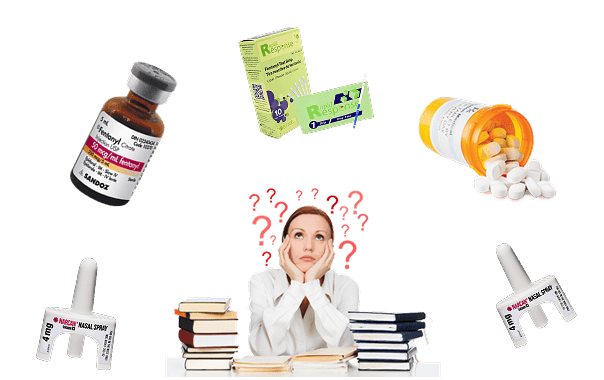
Secondary school students lack access to educational content on Opioid Overdose prevention.
End Overdose primarily tables at public events, such as festivals, to educate attendees and distribute resources. They also host in-person sessions, which are effective, but have limited reach. Furthermore, their online alternatives are often blocked and/or not tailored for elementary to high school students.
As a result, students do not have access to the education and resources they need when facing an opioid overdose .This hinders compliance with Melanie’s Law in California, which mandates that schools develop comprehensive safety plans to prevent and respond to opioid overdoses.
Skip to Solution
RESEARCH
We completed Competitive Analysis & User Interviews all to help create a vision and clarify intentions with our approach.
End Overdose provided us with 10 different platforms that they wanted us to draw inspiration from. Five of the platforms were learning applications, while the others were meant to align us with their intended aesthetic. After analyzing the different platforms, we were able to brainstorm ideas of how we envisioned this platform to look like. However, while we had a vision, we didn’t know if it was truly applicable. Therefore, our next step was to conduct user interviews.
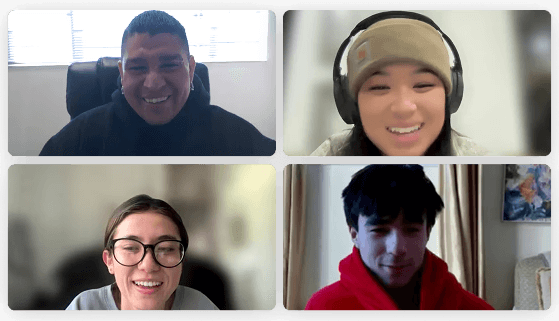
End Overdose provided us with 4 different subjects to interview: 3 employees and 1 high-school student. Before these interviews, we set intentions for what we wanted to gain from these interviews and formatted them into questions. Some key insights we wanted to look into included how learning is approached, what helps with retention, and gamification to help learning.
ANALYSIS
Students would benefit from a gamified and personalized learning experience while engaging with sensitive topics.
Our competitive analysis revealed many things to us about learning platforms:
Many utilize gamification to continuously engage students and help with retention.
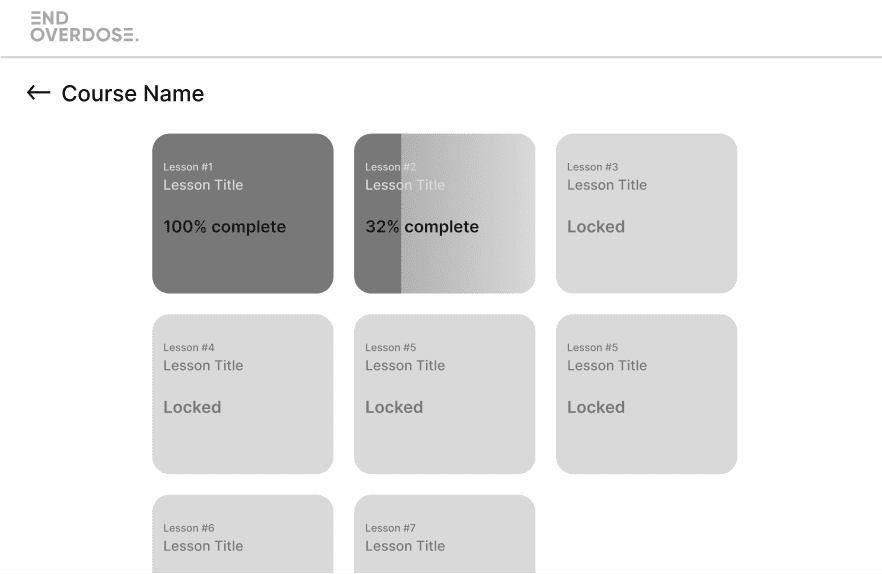
They lock content, requiring you to complete earlier lessons before advancing.
Content is made into smaller, bite-sized lessons to make it easier to learn concepts.
Profile allow users to customize and also view past learning achievements
These were all aspects we wanted to include within our platform and brought these findings to user interviews to ensure that these were features that made sense for the overall goal of End Overdose’s learning platform.


IDEATING
Designing and iterating on wireframes for different interfaces and features took a while.
Once we finished analyzing our research, we were able to finally begin designing how the platform would be formatted and how different features would function.
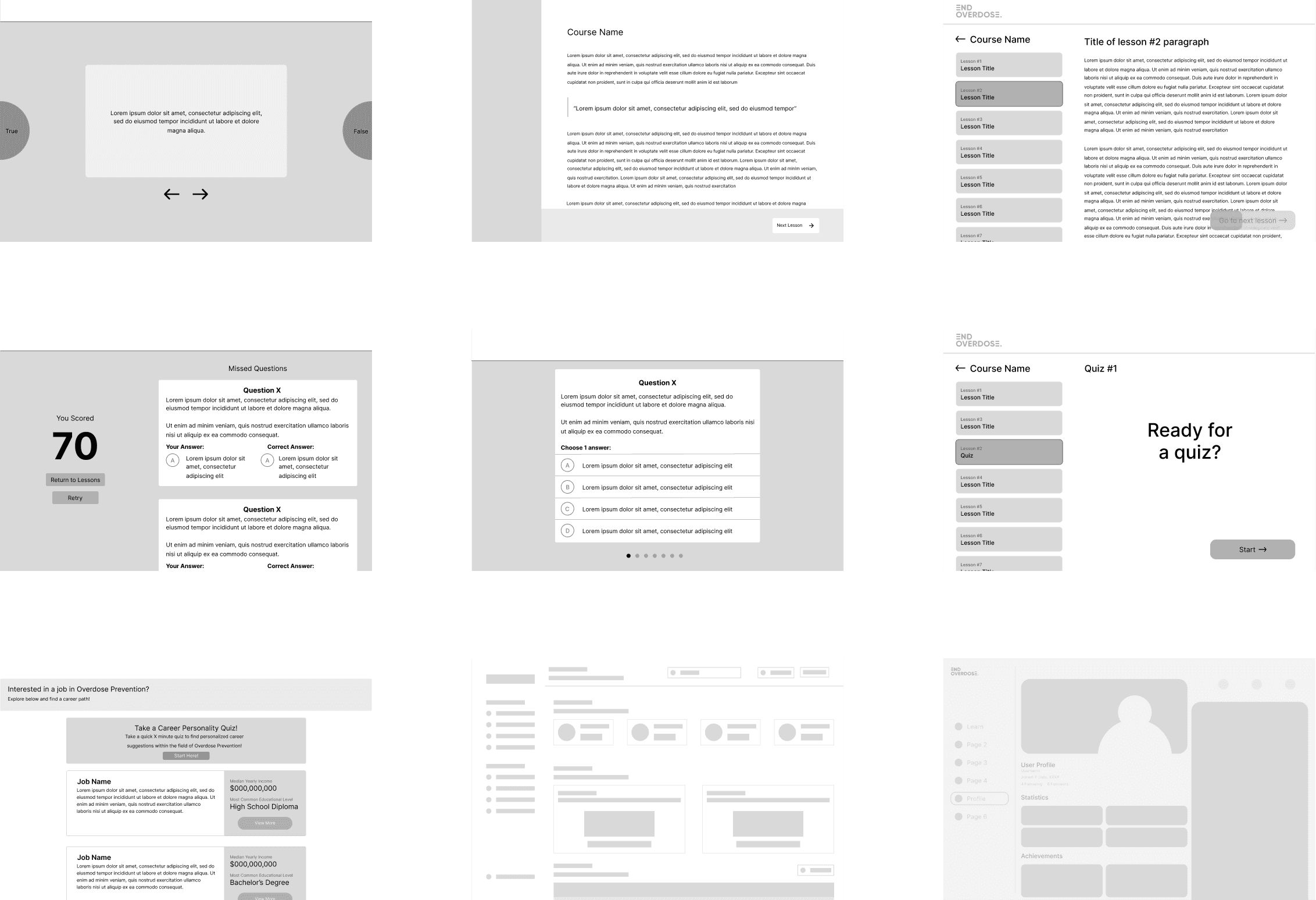
After completing our Low-Fidelity Wireframes, we went through and analyzed each iteration so we could go with the ones that we believed aligned with our stakeholders’ vision while still maintaining a strong foundation. After our Design Lead met with our End Overdose POC, we were able to decide on which iterations to take to our Mid Fidelity stage.
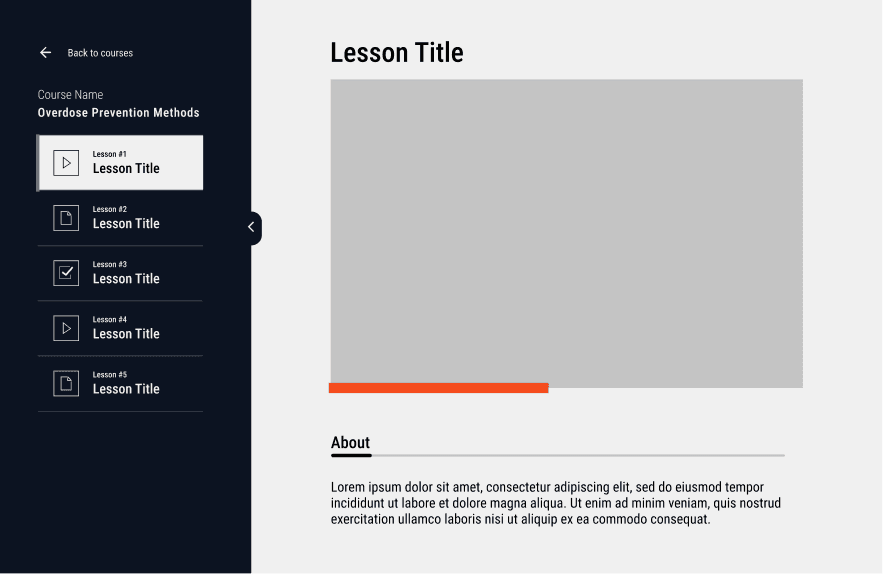
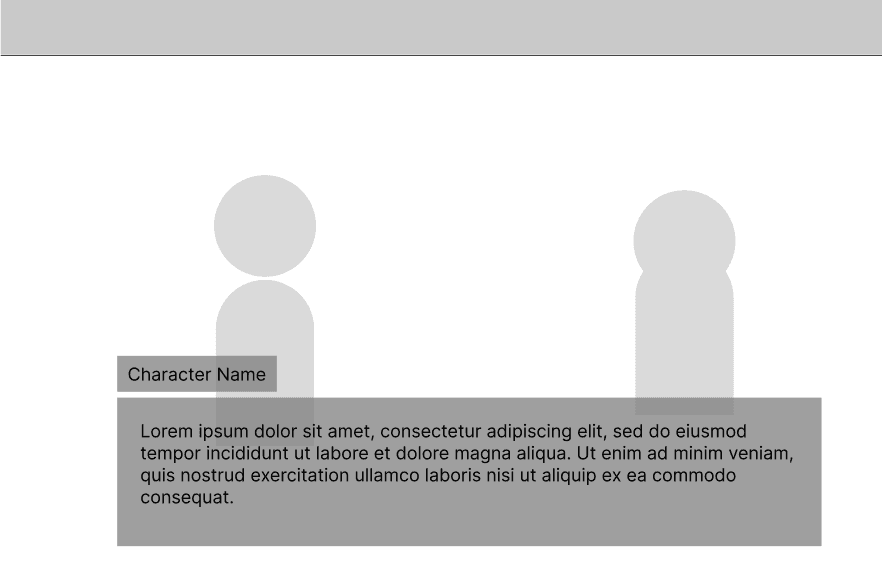
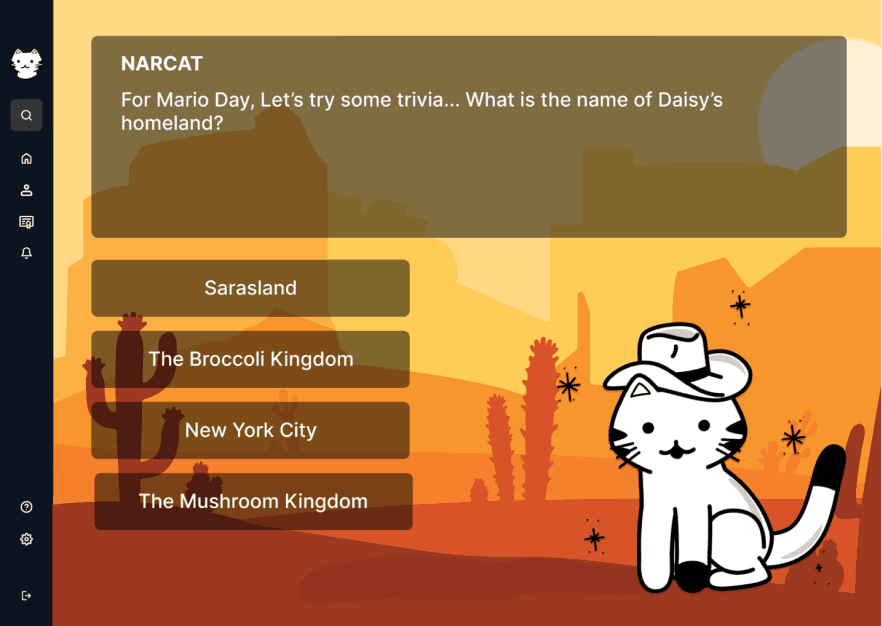
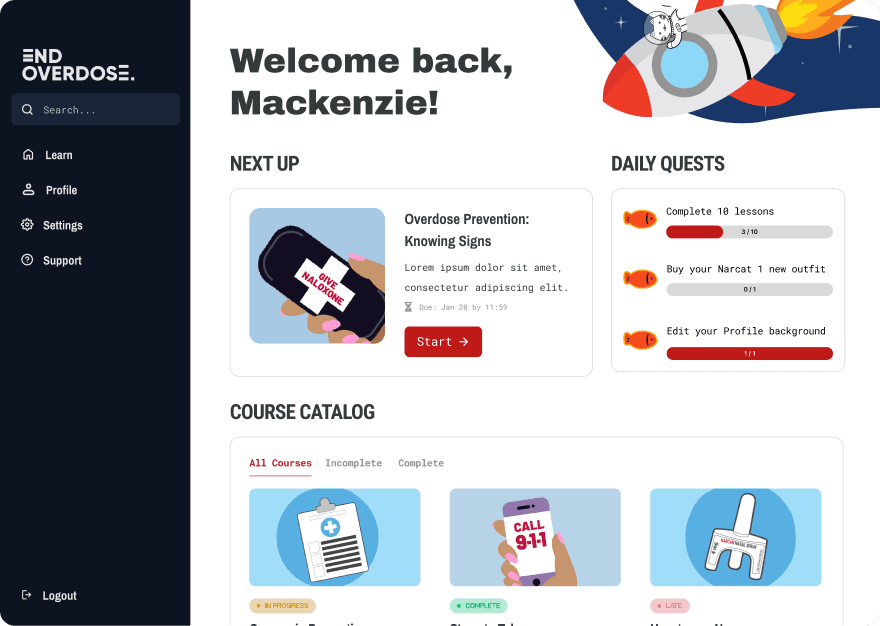
During our Mid-Fidelity Wireframe stage, we worked on making the overall aesthetic cohesive while still making time to iterate and improve on designs. We also began building up a style guide and a library of components, so we would be prepared when we eventually moved into our High-Fidelity stage.
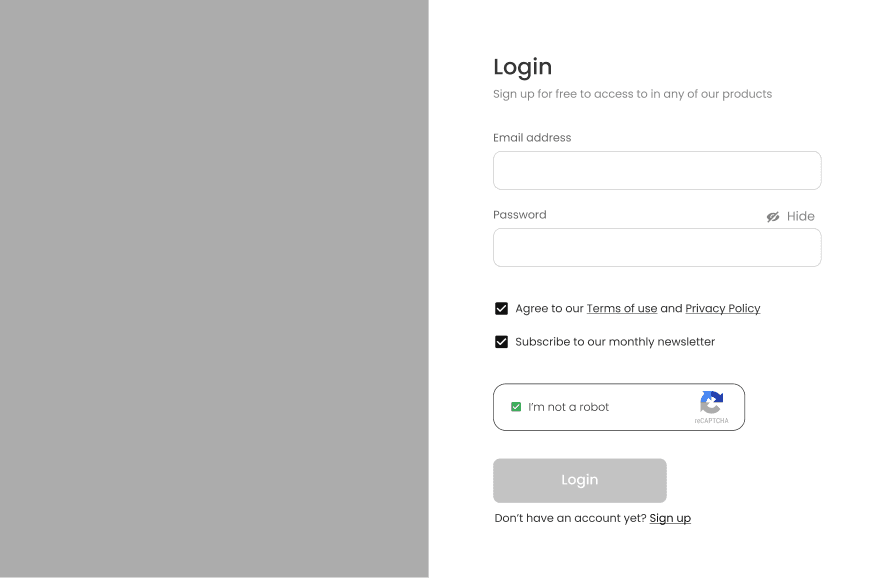
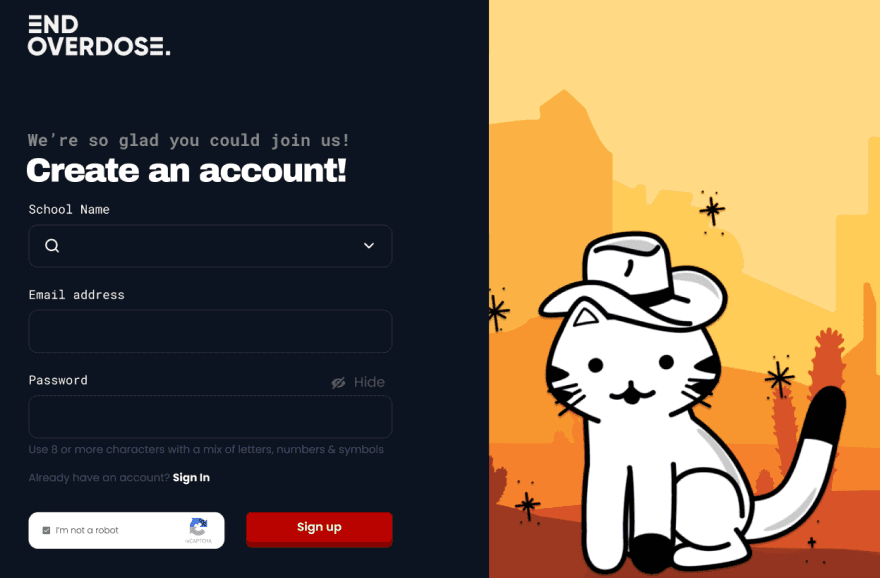
Sign-Up/Log-In
USABILITY TESTING
User Testing revealed that some of our assumptions weren’t obvious to others.
We eventually got to a point where we felt ready to bring back our interviewees for User Testing interviews. We prototyped our Mid-Fidelity Wireframes to follow a general flow for different types of interactions. There were different experiences for:
Students
School Admin
End Overdose Staff
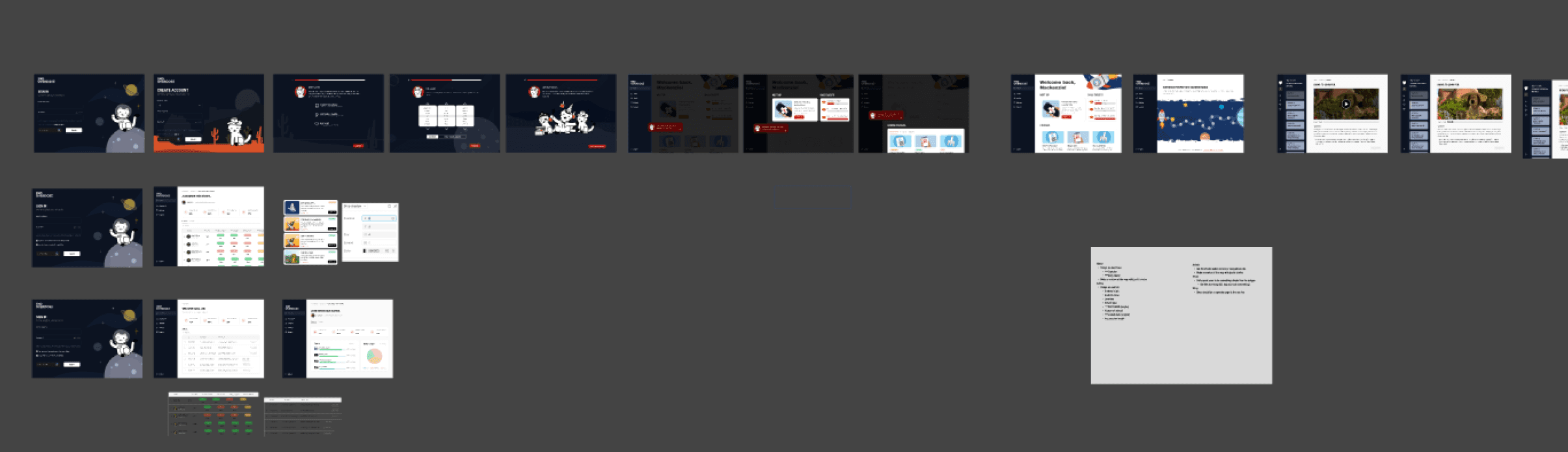
During User Testing, we asked participants to walk through our designed screens, describing how they would interact with each element to complete specific tasks. This helped us verify whether the user flow we intended actually matched how real users navigated through the interface. We made sure to take note of any deviations from our intended user flow and inquired about potential improvements to ensure a smoother experience with certain tasks.

SOLUTION
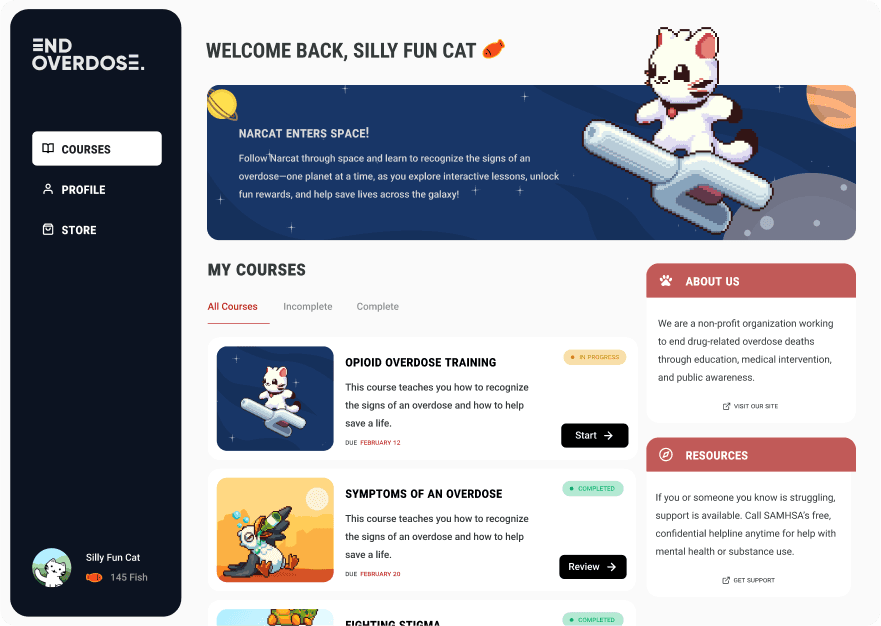
Following User Testing, we made the final push to complete this application.
FINAL PROTOTYPE
Take a look at our User Flow for Students!
REFLECTION
Working on this project helped to shape me as a designer and I couldn’t be more thankful.
Here are some things I learned:
Inexperience =/= Incompetence.
Everyone on a team wants you to grow.
Not everything is feasible and that's why communication is important
Can't wait to continue on with my 2nd year at Blueprint, where I'll be a Design Project Lead!